
Content
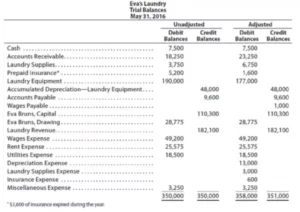
Therefore, it’s critical to understand why working capital matters, and how to calculate and interpret it. Routinely tracking your net working capital can let you know ahead of time when you need to improve or increase your cash reserve. Ultimately, it’s one of the best ways to gain valuable insight into your company’s financial stability, efficiency change in net working capital and ability to invest in future growth. The best way to ensure you have working capital is to keep money coming in on time or early. In other words, you want to shorten your cash conversion cycle and reduce your days sales outstanding. Make sure you send out invoices as soon as possible (unpaid invoices increase your current assets).
- Calculating net working capital isn’t difficult once it’s clear what is being factored into the calculations.
- The status of a company’s credit line can have an impact on the net working capital.
- AltLINE is a direct bank lender and a division of The Southern Bank Company, a community bank originally founded in 1936.
- Populate the schedule with historical data, either by referencing the corresponding data in the balance sheet or by inputting hardcoded data into the net working capital schedule.
Accordingly, you need to increase your sales team and market your products using various channels. An adequate amount of Net Working Capital helps you to face shocks and peaks in demand. Besides this, you will be able to sell products to your customers at a discount. As a result, your suppliers and banking partners offer discounts and extend more trade credit. Such a continuous flow of funds ensures you purchase raw material and produce goods uninterruptedly.
Download a free copy of “Preparing Your AP Department For The Future”, to learn:
The company also has $20,000 in short-term debt and $5,000 in dividends payable. Net working capital differs from the current ratio because it provides a dollar amount rather than a percentage. A business with current assets equal to current liabilities has a net working capital of $0 and a current ratio of one. Small companies could have a high current ratio but not enough working capital to meet any unexpected cash needs. Conversely, large companies with positive working capital but a low current ratio might need additional working capital.
Therefore, the impact on the company’s free cash flow (FCF) is +$2 million across both periods. Since we’re measuring the increase (or decrease) in free cash flow, i.e. across two periods, the “Change in Net Working Capital” is the right metric to calculate here. It might indicate that the business has too much inventory or is not investing its excess cash. Alternatively, it could mean a company is failing to take advantage of low-interest or no-interest loans; instead of borrowing money at a low cost of capital, the company is burning its own resources. Most major new projects, such as an expansion in production or into new markets, require an upfront investment.
How to calculate NWC
A company’s current assets are those that are expected to be converted into cash and used within one year or less. Current assets include cash and cash equivalents, inventories, accounts receivable, and short-term investments. A company’s current liabilities are those obligations that are due and payable within one year. Current liabilities include accounts payable, accrued wages due to employees, short-term debt, dividends payable, and taxes payable. NWC is a key metric in financial analysis that helps investors and creditors assess the financial success and stability of a company.
- Similarly, a net working capital change helps us understand the company’s cash flow position.
- You can also manage subscriptions, international payments to your team, contractors or freelancers all over the world, all from one place.
- Furthermore, it helps in studying the quality of your business’s current assets.
- When you refinance short-term debt with long-term debt, you can reduce your current liabilities.
- For example, say a company has $100,000 of current assets and $30,000 of current liabilities.
- Making sure that your warehouses or inventory have a consistent flow of materials incoming and product outgoing can help provide a steady stream of profitable income.
Therefore, the company would be able to pay every single current debt twice and still have money left over. Next, add all the line items that are current liabilities on your balance sheet. Ideally, the optimal ratio should be between 1.2 – 2 times the amount of current assets to current liabilities. If you see a higher number, it could mean that your company isn’t using its current assets to its maximum. Net working capital (NWC) is an organization’s total short-term assets minus its short-term liabilities. An organization’s net working capital paints a picture of its overall financial health and ensures it’s being run efficiently.
Net Working Capital Formula: What Is It, and Why Does It Matter?
There are a number of ways to calculate net working capital depending on what the person analyzing the data is looking for. This guide will go over the components of net working capital and how to calculate it using a few different formulas. Create a budget for expenses and report each of the cost components separately.
Accordingly, Net Working Capital showcases the ability of your business to pay off its liabilities in a short period of time. However, positive net working capital isn’t necessarily always a net positive for your company’s competitive, operational, and financial health. If you find yourself swimming in extra cash, it’s likely you’re not investing your liquid assets as strategically as you might and are missing out on opportunities to grow, produce new products, etc. Therefore, assuming that the net working capital is positive (i.e. current assets are greater than current liabilities), the business is likely to be able to generate enough cash to pay these current liabilities. In case the net working capital is negative, the business may have to tap other sources of funding to pay back near-term obligations. It is important to understand that short-term debts constitute liabilities in the calculation of the working capital.
Net Working Capital: Meaning, Formula, and Example
It also gives you a better understanding of how you intend to repay your dues. Your NWC balance sheet becomes a contributing factor to your financial decisions for the upcoming year. It simply requires the organization of all your current assets and your current liabilities.

If your NWC ratio climbs too high, you may not be leveraging your current assets with optimal efficiency. A positive net working capital means that the company is able to pay all its debts without having to take on further loans or investments. The company has enough cash to repay its dues, while also focusing on improving the business. Internally, your working capital tells you where you stand financially.
Negative Net Working Capital
This is because an exhausted credit line cannot pay any dues, and becomes a liability instead. Credit lines can only fund short-term debts and should be treated as such. Both large and small businesses with high levels of working capital, on the other hand, will find themselves capable of making changes much more quickly. This metric is used by business owners, lenders, and even regulatory agencies.
- At the end of 2021, Microsoft (MSFT) reported $174.2 billion of current assets.
- In order to better understand the ways in which NWC, changes in NWC, and the NWC ratio are used, let us consider the example of fictional business Company X and its efforts to monitor and manage its liquidity.
- This is because current assets help in creating a buffer for meeting your obligations within your ordinary operating cycle.
- For example, if Company ABC has current assets of $120,000 and current liabilities of $90,000, then the net working capital would be $30,000.
This means this amount is sufficient to pay off the current liabilities. If this figure would have been negative, it would indicate that Jack and Co. did not have sufficient funds to pay off its current liabilities. Also, the Net Working Capital indicates the short-term solvency of your business. It helps your creditors to know your liquidity position before supplying goods or services on credit to you . Also, it indicates how much of the long term funds you need to fund your current assets.
Current liabilities
If XYZ Limited’s liabilities had exceeded the assets, the working capital would be negative, indicating that the short-term liquidity is not good and the current liabilities cannot be paid off with the current assets. As stated earlier, the Net Working Capital is the difference between the current assets and current liabilities of your business. Any change in the Net Working Capital refers to the difference between the Net Working Capital of two executive accounting periods. Such obligations may include payments for purchasing raw materials, wages, and other operating expenses. That is timely payment to your creditors and bankers ensures a regular supply of goods and short-term loans.